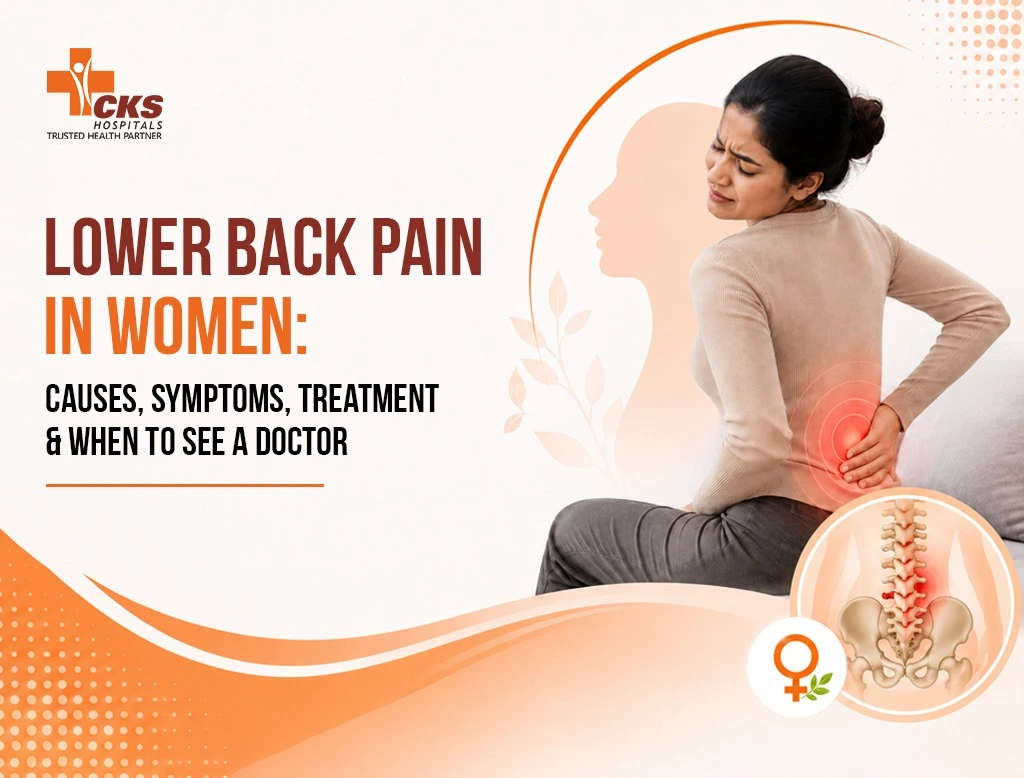
Lower Back Pain in Women: Causes, Symptoms, Treatment & When to See a Doctor
Are you worried about pain in your lower back that keeps coming back? It is a common concern across India, and recent figures reflect it. As per a medical study that assessed the health of about 2,400 women, it was found that around 70% of them had experienced chronic lower back and pelvic pain. It is important to note that lower back pain in women stems from regular challenges such as muscle strain.
But sometimes it may also be linked with menstrual cycles and urinary tract infections. That overlap is exactly why the same form of pain may feel confusing, and from where it has developed. The reassuring part is that most of the lower back pain in females can be managed with simple care and rest.
In this regard, this guide explains to you the common causes of pain in the lower back in women, symptoms that you should pay attention to and when you should consult a doctor. We’ll also explain how the best hospital in Jaipur treats these conditions.
What Is Lower Back Pain in Women?
Lower back pain in women is a condition that refers to stiffness, discomfort or an aching feeling near the hips or the lower part of the spine. This pain can be a mild, nagging ache or a sharp pain. These pains may limit your ability to move, and may stay in one spot.
Lower back pain is commonly divided into the following two types:
- Acute Pain: This pain appears suddenly and may disappear within a few days to a few weeks.
- Chronic Pain: Chronic lower back pain means that the pain stays for about 12 weeks or longer.
The World Health Organisation reports that about 90% of the causes are non-specific, which means that no single cause can be identified for lower back pain. Pain in the lower back can also be called lumbar pain.
Common Causes of Lower Back Pain in Women
Most lower back pain in women causes can be traced back to issues like muscle strain, spine-related reasons, menstruation, hormonal shift, pregnancy, gynaecological reasons, etc. Here are some of the common causes of lower back pain and what you can do if they appear:
| Cause | Common Signs | What To Do? |
| Muscle strain or sprain | Sudden ache after lifting or twisting, tender muscles | Rest for a few minutes |
| Poor posture or prolonged sitting | Stiffness that worsens as the day goes on | Correct your posture |
| Sciatica or nerve compression | Pain radiating down the leg or you feel numbness | Consult a doctor if the pain persists for a longer period or worsens |
| Slipped disc or disc degeneration | Sharp pain that spreads to the legs | Get a medical evaluation |
| Arthritis, osteoporosis or age-related changes | Gradual, ongoing ache and stiffness | Consult a doctor for bone and joint functionality |
| Obesity, weak core muscles or a sedentary lifestyle | Dull, recurring ache, low back fatigue | Perform exercises to strengthen the core |
Postural Problems and Prolonged Sitting
Sitting at a desk for more than an hour with poor posture puts constant pressure on the lower spine. It also causes stiffening and pain that increase throughout the day.
Sciatica or Nerve Pinching
If there is any compression of the nerve in the lower spine, pain in the lower back may spread to the buttocks and the legs. This condition is usually associated with numbness or weakness of the leg.
Bulging Disc or Degenerative Disc Disease
Pressure exerted on the nerves due to bulged or degenerated discs in the spine can cause sharp pain that gets aggravated if you bend forward or sit. At this level, the identification of the causes of lumbar pain in women requires an imaging test.
Arthritis, Osteoporosis or Normal Ageing Process
Pain and stiffness are caused by the degeneration of the spinal joints or decreased bone density. Along with that, women who are close to their menopause have an increased risk of getting osteoporosis.
Obesity, Weaker Core Muscles and Sedentary Lifestyle
Being overweight and having weaker core muscles put additional strain on the lower back. Being physically inactive contributes to increased frequency and persistence of pain in the lower back.
Women-Specific Causes of Lower Back Pain
Some causes of pain in the lower back in women are directly tied to the reproductive system and the hormonal cycle. Because of that, the same ache may feel different at various life stages. The following are some of the women-specific causes of pain in the lower back:
Before Your Period
In the days leading up to menstruation, lower back pain before periods is common, and there is nothing to worry about. The lower back pain before menstruation may occur because the body prepares to shed the reproductive area and release hormone-like chemicals called prostaglandins. It triggers mild uterine contractions, and you may feel this cramping as pain in your lower back.
During Your Period
Sometimes, lower back pain during periods occurs because your uterus contracts to help push out its inner lining. This bodily change is also triggered by prostaglandin, which causes the uterine muscles to squeeze and relax.
Lower Back Pain During Pregnancy
As the baby grows in the mother’s womb, the chances of pain in the lower back increase. This mainly happens because the growing baby shifts their centre of gravity, which places additional strain on the lower spine. Pain in the lower back may also happen because of the expansion of the mother’s abdominal muscles.
Lower Back Pain After Delivery or C-Section
Postpartum lower back pain lasts longer because Relaxin keeps the pelvic joints loose for weeks, and the strength of the abdominal muscles is reduced temporarily. If the childbirth is done through a C-section, the healing scar tissue and temporarily weak core muscles may also cause lumbar pain.
Menopause and Lower Back Pain
Menopause naturally occurs when a woman is between 45 to 55 years old. During menopause, the oestrogen levels fall, which lowers bone density and affects the joints of the spine. Because of these bodily changes, the lower back becomes more prone to stiffness or sudden pain.
Endometriosis, Fibroids, Ovarian Cysts and Pelvic Inflammatory Disease
Sometimes, the source of pain in the lower back lies in the conditions of the reproductive organs. Conditions such as fibroids, ovarian cysts, endometriosis and pelvic inflammatory disease may show symptoms like lower back pain. If you are experiencing lumbar pain coupled with severe cramps, unusual bleeding or pelvic pain, then it is better to consult an obstetrics and gynaecology specialist.
Symptoms That May Come With Lower Back Pain in Women
Beyond the ache itself, the lower back pain in women symptoms are leg pain and cramping. Here are a few more symptoms that may occur with pain in the lower back:
- Stiffness
- Pelvic pain
- Difficulty in moving your lower back
- Pain that spreads to your hips, buttocks or legs
- Numbness, tingling or weakness in one leg
- Cramps during your menstrual cycle
- A burning sensation while urinating
- Unusual bleeding from the vaginal area
What is Lower Back Pain on the Left Side vs Right Side in Women?
The side on which you feel back pain hints at different medical conditions. For instance, one-sided pain is a classic sign of a kidney stone. As per a report published by the National Kidney Foundation in July 2025, 1 out of 10 people are prone to kidney stones.
Here are some more factors that can help you know the possible cause behind one-sided lower back pain:
| Aspect | Left-Sided Pain | Right-Sided Pain |
| Muscular cause | Muscle strain or poor posture on the left | Muscle strain or poor posture on the right |
| Kidney-related cause | Left kidney stone or infection | Right kidney stone or infection |
| Gynecological link | Ovarian cyst or endometriosis on the left | Ovarian cyst or endometriosis on the right |
| Urgent concern | Fever, urinary changes, or severe cramps | Sudden, severe lower-right pain (possible appendicitis) |
Left-Sided Lower Back Pain in Women
If you are feeling pain on the left side of the lower back, it may be due to strained muscles, the left ovary, the left kidney or the bowel. Lower back pain on the left side in women may also be connected with a kidney stone if you experience a sharp pain.
Right-Sided Lower Back Pain in Women
Lower back pain on the right side may indicate similar kidney-related, muscular or gynaecological issues. However, such pain in the lower back on the right side in females may be caused by inflamed appendicitis or gallbladder disease.
Is It Muscle Pain, Kidney Pain, UTI or Gynecological Pain?
The cause of pain in the lower back among women is often narrowed by checking what triggers the pain and what its symptoms are through an Obstetrics and Gynaecology specialist. Here are some pain types and the main differences among them:
| Pain Type | Key Clue | Possible Cause | Doctor To Consult |
| Muscle pain | Worsens with movement or posture | Strain, sprain, weak core | Orthopaedic doctor or physiotherapist |
| Kidney pain | Deep one-sided flank pain | Kidney stone or infection | Urologist or nephrologist |
| UTI-related pain | Burning urination with back discomfort | Urinary tract infection | Physician, urologist, or gynaecologist |
| Gynecological pain | Back pain with pelvic symptoms | Endometriosis, fibroid, cyst, PID | Gynecologist |
| Nerve pain | Pain radiates down the leg | Sciatica or disc compression | Orthopaedic doctor, neurologist, or spine specialist |
Muscle-Related Lower Back Pain
Muscle pain in the lower back develops because of excessive exercise, heavy lifting, sitting at a desk for more than 15 minutes or poor posture. Such pain may improve with rest.
Kidney Stone or Kidney Infection Pain
Kidney pain vs back pain should be assessed carefully. This is because kidney pain is typically deeper than muscle pain, and it may be felt on either the left or the right side of the lower back. If you feel pain that comes in waves and moves towards the groin, then it may be a kidney stone. Symptoms like fever with flank pain may be linked to a kidney infection.
UTI-Related Back Pain
A Urinary Tract Infection (UTI) typically develops in the lower urinary tract. It produces a burning sensation during urination and back pain develops if the infection ascends towards the kidneys. Consequently, UTI lower back pain female patients may need prompt medical assistance if the infection is accompanied by fever or chills.
Gynaecological or Pelvic Pain
In some situations, the lower back pain and pelvic pain in women may occur with heavy menstruation, abnormal discharge or discomfort during intercourse.
Nerve-Related Pain or Sciatica
Sciatica in women refers to the irritation of the sciatic nerve that causes burning, shooting pain in the lower back. The pain may spread to the buttocks and down one leg. This form of pain is mainly triggered by weight gain during pregnancy, hormonal changes and pelvic-specific conditions such as endometriosis.
When Should Women Worry About Lower Back Pain?
Most of the pain in the lower back is not very serious and may fade away with regular care and rest. At the same time, you should pay close attention to the following lower back pain red flags for women:
- Pain rose due to an accident, a fall or another injury
- Back pain that is connected with fever or chills
- Improper bowel or bladder control problems
- Weakness, tingling or numbness in one or both legs
- Constant or intense pain
- Unexplained weight loss accompanied by back pain
- Lumbar pain with swelling or changes in skin colour on the back
How Do Doctors Diagnose Lower Back Pain in Women?
The diagnosis of lower back pain in women can be done through a mix of physical examination and medical tests. Here is a brief look at each of them:
Checking of Symptom History and Physical Examination of the Patient
Your doctor will probably begin by asking about when the pain began, its intensity, your menstrual cycle and urinary sensation. After that, the doctor performs a physical examination to identify the source of the pain.
Use of Imaging Tests like X-Ray or MRI
In some back pain conditions associated with spine pain, doctors may order an MRI or X-ray for lower back pain diagnosis. These imaging scans may show any changes in spine alignment, fractures or arthritis.
For a detailed soft tissue assessment, an MRI for lower back pain may provide a clear view of nerves, discs and muscles.
Urine Test for UTI or Kidney Issues
If you experience urination problems along with back pain, then a urine test can help to confirm whether the root cause is an infection or a kidney problem. This test helps in detecting signs of urinary tract infection as well as signs of kidney stones.
Pelvic Ultrasound for Gynecological Causes
A pelvic ultrasound can be required if your doctors suspect that there is a reproductive cause for the lumbar pain. This diagnosis examines the uterus and ovaries and can rule out gynecological conditions that may show similar symptoms.
Blood Tests
Blood tests can be done if there is a risk of infection or an inflammatory condition. In a blood test result, a rise in white cell count may indicate the body’s response to infection. While other blood markers help in assessing inflammatory conditions that may affect your joints and spine area.
Treatment Options for Lower Back Pain in Women
Effective treatment for lower back pain in women includes rest and changes in regular activities, heat and cold therapy, prescribed medication and physiotherapy. Some other medical interventions include treatment for UTI, kidney stones and surgery for severe conditions. Let’s have a brief look at each of them:
Rest and Changes in Daily Activities
If you experience sudden pain in your lower back, then resting for about 15 – 20 minutes can help the body to relax from the inflammation. For lumbar pain caused by lifting heavy objects or long sessions of workouts, reducing the intensity of exercise and taking frequent breaks can help to reduce the pain.
Taking Heat and Cold Therapy
For gradual lower back pain relief for women, using cold therapy, such as ice packs, within 24 hours of injury or pain helps reduce swelling. You may also switch to heat therapy by using a hot water bag after 48 hours, or for stiffness and menstrual lumbar pain.
A hot compress for back pain helps to relax your tight muscles and improves blood flow. Place these packs gently in the area that causes pain for the most effective results.
Prescribed Medicines
Taking painkillers and anti-inflammatory medicines as prescribed by your doctor can help you relieve lumbar pain discomfort in a shorter duration. Also, avoid self-medication since it may cause side effects.
Physiotherapy and Core Strengthening
Physiotherapy for lower back pain helps in treating the root cause. This treatment is mainly followed by physiotherapist-guided exercises such as knee-to-chest stretch, cat-cow stretch, and child pose, which help in strengthening your core and back muscles. It may also help in improving your posture and flexibility.
Treatment for UTI, Kidney Stones or Gynecological Causes
If your lumbar pain is combined with uneven urination, left or right-sided pain, then it may be related to UTI, kidney stones or other gynecological conditions. In these situations, your doctor may order some other tests and medicines to relieve pain.
Surgical Approach for Severe Conditions
Surgery to relieve pain from the lower back may only be chosen if the patient is experiencing progressive weakness or there is a structural problem in the spine. This treatment is uncertain as the final option after exploring other medications.
Home Remedies and Lifestyle Tips for Relief
To relieve mild lumbar pain, you just need to follow a few consistent habits and pay attention to the signs that require prompt medical attention. Effective lower back pain relief at home for women is mostly focused on correcting posture and gentle movement.
Some of the useful home remedies to relieve pain in the lower back include the following:
- Take short walks or do light stretching
- Maintain an upright posture when you stand, sit or use your mobile
- Stay hydrated as it supports better renal functions
- Follow a balanced diet and keep your body weight near your ideal Body Mass Index (BMI)
- Avoid lifting heavy weights and suddenly moving to the left or right
By following the above home remedies for lower back pain in women, you can increase the possibility of relief from the pain within a few days. If the pain in your lower back persists, then consulting a doctor is the most feasible option.
Best Exercises and Sleeping Positions for Lower Back Pain
The most effective exercises and sleeping positions to prevent pain in your lower back reduce strain on surrounding muscles. Some of these lower back pain exercises for women are as follows:
- Gently stretch your body through yoga for lower back pain in women.
- Go for a morning and evening 10-minute walk.
- Perform core strengthening exercises such as pelvic tilts, bridges and modified planks.
- Sleep on your side with a pillow between your knees, as it keeps your spine, hips and pelvis in alignment.
- Sleep on your back with a pillow under your knees.
Besides these, some of the best sleeping positions for lower back pain for females are the reclined sleeping position and stomach sleeping with pelvic support.
Which Doctor Should You Consult for Lower Back Pain in Women?
Consultation from the right doctor depends on the symptoms you are experiencing, along with the pain in your lower back. Here are some factors that can help you choose which doctor to consult for lower back pain in women:
- If pain in your lower back is linked with spine pain, muscles or nerves, an orthopedic doctor for back pain is the appropriate choice.
- If your pain stems from painful menstruation, blood flow or pelvic discomfort, then a gynecologist for lower back pain is the right choice.
- In case you are experiencing pain in your lower back along with fever, burning sensation while urinating or one-sided flank pain, a diagnosis from a urologist for back pain is an appropriate choice.
How to Prevent Lower Back Pain in Women?
To prevent pain in the lower back, some effective steps are correcting your posture and improving core strength. Here is a brief look at a few more strategies to prevent pain in your lower back:
- Practising posture correction exercises like cat-cow exercises in a seated position and elbow curls in a standing position helps relieve pain.
- Ensure that you drink enough water and avoid carrying heavy weights.
- Maintain a healthy weight by having a balanced meal and exercising, as it reduces strain on your lower back and joints.
Why Choose CKS Hospitals for Lower Back Pain Treatment?
CKS Hospitals brings specialist doctors for orthopaedics, urology, spine and gynaecology under one roof. It helps to reduce the downtime to diagnose the actual cause behind your lower back pain and receive treatment in one place. As an NABH-accredited multispeciality hospital in Jaipur, it offers state-of-the-art medical facilities that meet the highest standards of patient-centred care.
The following are a few more features that make the CKS hospital the best multispeciality hospital in Jaipur for diagnosing and treating lower back pain in women:
- More than 200 beds and over 20 specialty departments
- A team of 50 plus experienced doctors across the relevant specialties
- Centre of Excellence in Orthopaedics for spine, disc and muscle conditions
- Dedicated obstetrics, gynaecology and urology departments for pelvic and kidney-related causes
- Modern diagnostic imaging and 24/7 emergency care
FAQs
1. What causes lower back pain in women?
Poor posture, muscle strain, weakened core muscles, the menstrual cycle, menopause, and pregnancy are common reasons why many women experience pain in their lower back.
2. Which foods can help in maintaining a healthy lower back?
To improve your lower back condition, it is necessary to include in your daily diet a balanced amount of vitamin D, calcium, fruits, vegetables, and whole grains.
3. Is lower back pain before periods normal?
Mild pain in the lower back is normal and it is most likely caused by hormonal changes. However, you should visit a specialist when experiencing sharp pain.
4. Can dehydration lead to lower back pain?
Dehydration may not be the only reason for pain in the lower back, but it increases the probability of kidney stones and muscle cramps.
5. What is the best way to relieve lower back pain?
The most effective approach to relief from lower back pain is correcting your posture, taking heat and cold therapy and performing core strengthening exercises.
6. When to worry about lower back pain in females?
You should seek medical attention if the pain in your lower back is followed by an injury or occurs with fever, leg weakness, numbness or unexplained weight loss.
7. What are the big 3 for lower back pain?
The big three exercises for lower back stability are pelvic tilts, bridges and modified planks. You can also use other exercises as per your convenience.

Dr Prakash Chandwani
( Chief Managing Director ) MBBS, MD, DM (Cardiology)
Dr. Prakash Chandwani, the Director and Chief Interventional Cardiologist of CKS Hospital F98A VKIA Road No 6, Sikar Road in Jaipur City.
Know More →